Why Branded Resale?
Branded resale and recommerce: the smart move for DTC — boost revenue, retention and sustainability with launch models, key KPIs and quick FAQs.
Style That Starts Again


Benefits, strategy and how brands win with recommerce and branded resale
PRELOVEDD
RESALE AT A GLANCE
Why Branded Resale Matters
Why branded resale?
The strategic case
1. Recover and capture value
When products return to the market via generic marketplaces, the original brand loses visibility and the chance to capture future purchases. Branded resale lets you recapture value through credit or direct resale, converting returned goods into repeat purchases or marginable sales.
2. Boost lifetime value (LTV) and retention
Resale programmes convert earlier customers into repeat buyers and sellers. Customers who trade in or resell with the brand typically repurchase more frequently and spend more when using credit. Branded experiences reinforce brand loyalty and create a circular relationship between purchase and resale.
3. Control the customer experience
A brand‑run resale platform ensures consistent product presentation, photography, pricing policies, and customer service — matching the quality customers expect from the main site. This consistency protects brand perception and reduces the risk of poor second‑hand listings damaging the brand.
4. Attract new customers affordably
Resale attracts price‑sensitive and sustainability‑motivated shoppers who may not be reachable through traditional acquisition channels. Resale purchases often introduce first‑time buyers to the brand who later convert at full price.
5. Improve sustainability credentials and compliance readiness
A brand that operates a resale programme can quantify and promote carbon and waste reductions, valuable for sustainability reporting, marketing and compliance with emerging regulations such as circular textile initiatives in the EU.
6. Reduce returns and sell‑through costs
Integrating trade‑in and returns resale channels gives brands options to reroute returned items back into the sales funnel rather than discounting or destroying stock. This reduces clearance reliance and improves gross margins.
7. Generate new marketing content and community
Resale programmes create authentic user stories — people reselling, styling second‑hand items, and sharing sustainability wins. This content boosts social proof, user‑generated content (UGC) and community engagement.
Branded resale vs third‑party marketplaces: key differences
- Brand control: Branded resale = full control over listing, imagery, pricing, returns policies and customer communications. Marketplaces are anonymous and inconsistent.
- Data ownership: A branded platform captures buyer and seller data that can be reused for CRM, re‑marketing and product insights.
- Customer experience: Seamless, on‑brand UX increases conversion and post‑purchase satisfaction.
- Financial capture: Brands can offer credit incentives to direct spend back to full‑price items, increasing effective revenue capture.

Core recommerce business models and when to use them
Trade‑in (brand buys back items)
- Best for: Brands that want guaranteed inventory, predictable unit flows, and the ability to offer immediate incentives.
- How it works: Customers ship or drop off items (for example trade-in clothes) in exchange for credit or payment. The brand inspects, refurbishes if necessary, and resells through a branded channel.
- Benefits: Immediate control of inventory, faster turnaround, excellent customer experience.
- Considerations: Requires capital to buy stock and logistics for verification and processing.
Peer‑to‑peer (P2P)
- Best for: Brands looking to scale inventory without buying stock, and to build community engagement.
- How it works: The platform enables customers to list items and transact with each other, with the brand taking a commission or offering fulfilment support.
- Benefits: Low inventory cost, community-building, wider selection.
- Considerations: Requires strong moderation/quality control and trusted payments; brand perception relies on third‑party sellers.
Returns resale (reroute returned items to resale)
- Best for: Brands with high return rates or significant excess returns volume.
- How it works: Items that cannot be restocked are vetted and pushed to a resale channel rather than being discounted or destroyed.
- Benefits: Preserves value, reduces waste, and often improves margins versus deep clearance.
- Considerations: Need fast inspection and categorisation processes.
Off‑price resale (brand sells excess inventory)
- Best for: Seasonal brands and those with overproduction challenges.
- How it works: Excess or out‑of‑season inventory is listed on a branded off‑price resale channel, preserving brand control while clearing stock.
- Benefits: Prevents margin erosion and protects brand reputation versus selling on generic discount channels.
How to choose the right model
- Assess return volumes, SKU lifecycles and current margin pressure.
- Consider capital availability for buy‑back programmes.
- Choose P2P for community engagement, trade‑in for speed and control, returns resale for cost reduction and off‑price for inventory clearance.
Step‑by‑step launch plan for branded resale
Define objectives and KPIs
Decide on the model and scope
Build operations: logistics, grading and refurbishment
Integrate technology
Customer experience and policy design
Launch marketing and incentives
Measure, iterate and scale
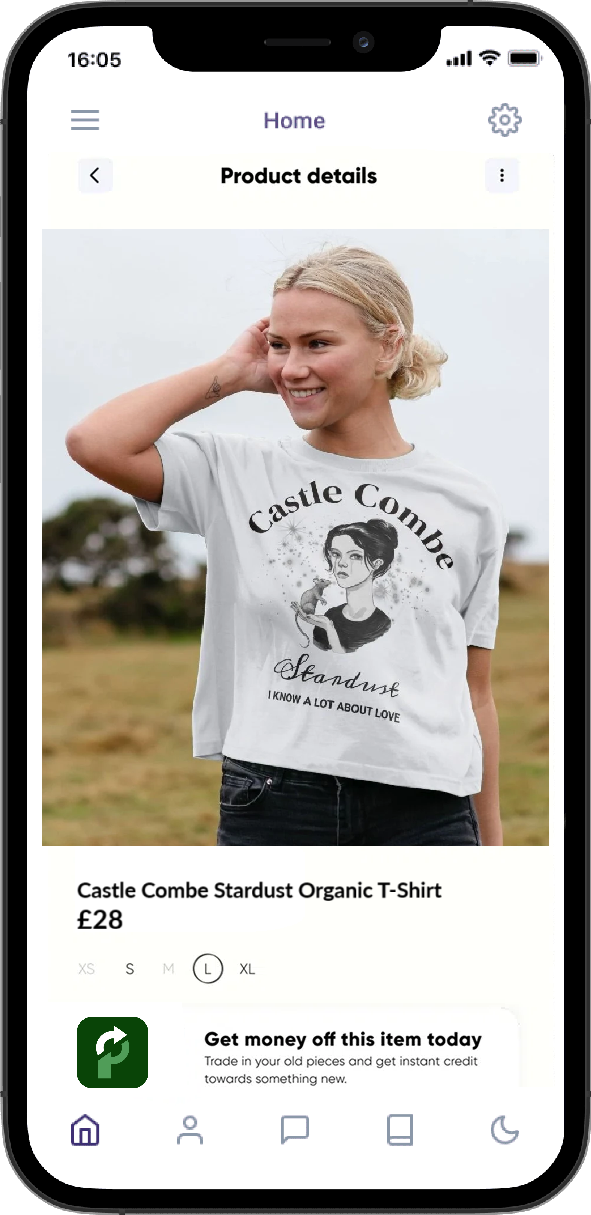
Swap your old item for store credit or upgrades - fast, fair and eco‑friendly.
Operational considerations and cost levers
- Grading accuracy reduces complaints and chargebacks.
- Refurbishment workflows add recoverable value but must be cost‑effective.
- Shipping economics can make or break a programme — offer flat rates or labels to simplify.
- Fraud prevention and payments for P2P models are critical.
Customer experience best practices
- On‑brand product pages for resale items with consistent photography, size guides and story copy.
- Transparent condition grades with images and examples.
- Easy returns and a clear refund policy for resale purchases.
- Fast and simple trade‑in mechanics: shipping labels, drop boxes, or in‑store options.
Measuring success: KPIs to track
- Incremental revenue from resale (absolute and as % of overall revenue)
- Redemption rate of credit issued (how much credit is spent on full‑price items)
- New customer acquisition from resale (percentage of resale buyers new to the brand)
- CO2 or waste avoided per item resold (to support sustainability reporting)
- Gross margin on resale sales
- Inventory velocity and time‑to‑market for refurbished items
- Seller retention and frequency
Example metrics to benchmark against
- Incremental revenue uplift: programmes often report measurable uplifts; some brands see low single‑digit to double‑digit incremental gains in the early phases.
- Redemption of allotted credit: higher redemption on credit often indicates customers are returning to purchase full price.
- Share of resale buyers who are new customers: resale frequently brings new customers into the ecosystem.

Marketing launch examples and ideas
- Trade‑in pop‑up: run a limited trade‑in drive with extra credit and a social campaign to attract sellers.
- Loyalty integration: reward trade‑in sellers with loyalty points and exclusive access to new drops.
- Capsule resale drop: curate a high‑quality selection from trade‑ins and release as a limited collection.
- Referral incentives: reward sellers who bring buyers to the resale channel.
Common risks and how to mitigate them
- Inventory quality variance: Use strict grading and clear listing condition standards.
- Cannibalisation of full‑price sales: Manage pricing and limited quantity of resale stock; prioritise credit redemption rules.
- Logistics complexity: Pilot in one market and build scalable packaging, returns and refurbishment processes.
- Brand dilution: Keep resale fully on‑brand with consistent product photography and copy.
Cost/benefit checklist before you start
- Estimate expected return volume and potential resale revenue
- Model refurbishment and logistics costs per unit
- Define expected redemption rate of credit and projected LTV uplift
- Staff or partner for inspections, customer service and fulfilment
- Legal and tax considerations for second‑hand sales in target markets
To Sum Up
Prelovedd helps you convert returns and trade‑ins into curated, styled resale inventory and trade‑in credit, design buyback offers, list pre‑owned items and reach second‑hand shoppers — Visit Prelovedd to launch your resale programme and boost revenue, loyalty and circular impact.
Frequently Asked Questions
We have put together some commonly asked questions
Why branded resale matters for DTC brands
Branded resale lets brands capture second‑hand value, keep customers in‑house and protect brand equity with a controlled, high‑quality resale experience. Read our Resale for Brands guide for details.
Why should my brand offer a resale programme?
Why branded recommerce over marketplaces?
Why resale increases customer loyalty
Why branded resale helps sustainability efforts
Why trade‑in clothes programmes work
We connect the dots
Great existing clothes + smart styling + simple experiences