What Does Trade-In Mean?
Discover what trade-in means, how trade-in programmes work, and why brands and consumers are embracing trade-ins as part of circular fashion.
Style That Starts Again


A Complete Guide to Trade-In Programmes, Circular Fashion & Recommerce
PRELOVEDD
TRADE-IN AT A GLANCE
What Trade-In Means
What does trade-in mean?
The basic definition
Where trade-ins are used: industries and examples
- Automotive: The origin of modern trade-ins. Dealers accept old cars, assess value and apply it to a new purchase.
- Consumer electronics: Smartphones, tablets and laptops routinely have trade-in options (Apple’s trade-in is a well-known example).
- Fashion and textiles: Clothing buy-back and trade-in programmes are growing as circular fashion gains momentum.
- Furniture and homewares: IKEA and other retailers run buy-back or take-back schemes to resell pre-loved items.
- Tools and industrial equipment: Trade-in for refurbished machines and parts reduces capital expense and extends equipment life.
- Appliances: Refrigerators and washing machines can be traded in for discounts on new, energy-efficient models.
How trade-in programmes work — the typical customer flow
- Online estimation: Customers enter key details (brand, model, condition) and get an instant estimate.
- Acceptance & logistics: The customer accepts the offer, ships the item using a prepaid label, or drops it in-store.
- Intake & verification: The item is inspected to confirm condition; the estimate may be adjusted.
- Settlement: The customer receives store credit, voucher, or cash. Credits are often designed to encourage further purchases.
- Second-life processing: Items are refurbished, cannibalised for parts, recycled, donated or resold on a secondary channel.
- Tracking & reporting: Inventory and environmental metrics are tracked for transparency and compliance.

Why trade-in matters — the business case
- Revenue recovery: Trade-ins capture value that would otherwise be lost and create profitable resale channels.
- Lower input costs: Reused components and recycled materials reduce the need for virgin inputs.
- Customer retention: Trade-in credit incentivises repeat purchases and deepens loyalty.
- Differentiation and brand image: Being circular attracts eco-conscious consumers and improves brand reputation.
- Regulatory readiness: In regions moving toward extended producer responsibility and circular textiles policies, trade-ins help meet compliance.
- Data and insight: Returned products provide intelligence on product failure modes, materials and lifecycle performance.
Trade-in for fashion brands — special considerations
Fashion has unique challenges: rapid style cycles, condition variability and complex material blends. Successful fashion trade-in programmes focus on:
- Clear condition grading (visual/functional checks) and transparent valuation rules.
- Easy customer journeys (online quote + in-store drop-off).
- Second-life channels suited to garments: resale marketplaces, outlet stores, upcycling partnerships or recycling streams.
- Logistics optimised for small, frequent returns.
Prelovedd’s trade-in clothes page is a natural landing page for consumers and brands to learn how to set up garment-specific trade-in flows.
Models of trade-in — full buy-back, part-exchange and take-back
- Full buy-back: The brand or retailer purchases the used item outright and assumes all resale/recycling responsibility.
- Part-exchange: Common in automotive — the dealer offsets the new purchase price with the trade-in value.
- Take-back: The company accepts returns but focuses on responsible disposal or recycling rather than resale.
- Voucher-based: Trade-in value is issued as store credit to encourage re-purchase.
- Commissioned resale: Brands partner with recommerce marketplaces to resell traded-in goods; Prelovedd offers resale-for-brands services to help partner brands manage this channel.
Customer experience: making trade-in easy and trustworthy
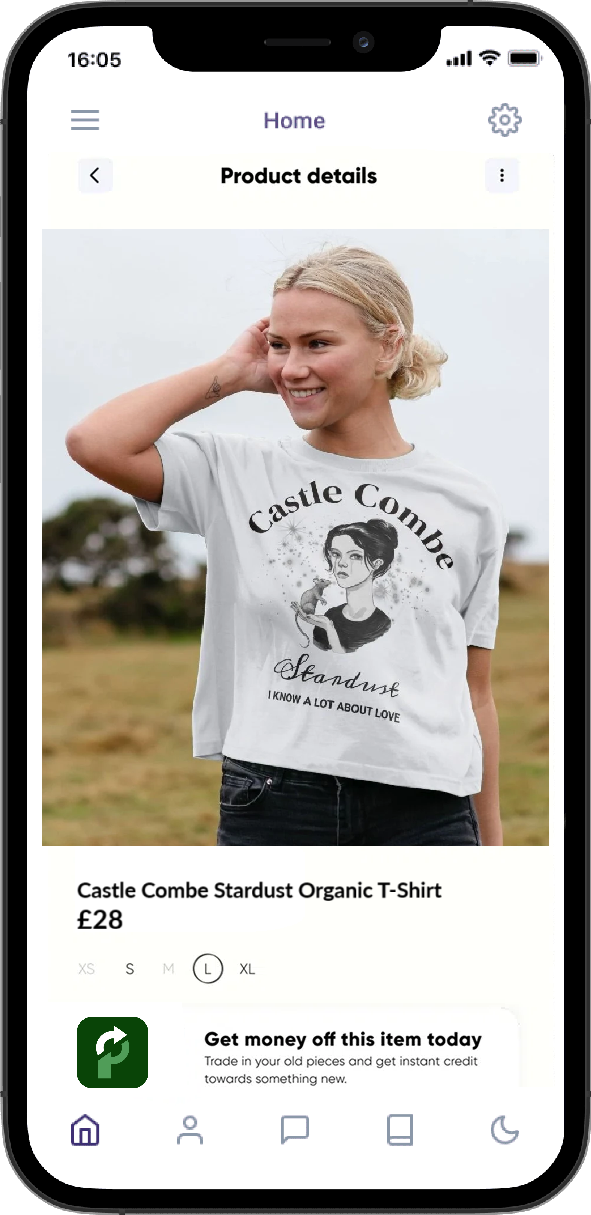
- Fast, transparent online estimates with clear condition categories.
- Prepaid shipping or convenient drop-off points.
- Instant or near-instant credit issuance where possible.
- Clear policies on what happens if an item doesn’t match described conditions.
- Visible sustainability claims backed by traceability and reporting.
Brands that invest in branded digital flows and simple logistics increase conversion and repeat engagement.
Swap your old item for store credit or upgrades - fast, fair and eco‑friendly.
Operational challenges and how to solve them
- Condition variability: Use standardised grading systems and clear customer instructions with photos.
- Logistics cost: Offer consolidated drop-off points or partner with reverse logistics providers.
- Inventory management: Track returns in real time and route items to the right second-life path via automation.
- Regulatory compliance: Prepare for local EPR rules and evidence requirements.
- Margin erosion: Set buy-back prices strategically and boost resale margins through refurbishment or value-added services.
Technology and data: the backbone of scalable trade-ins
Digitisation enables quick quotes, tracking, automated routing, refurbishment workflows and reporting. Key features to enable:
- API-driven valuation tools.
- Barcode/RFID tracking for returned items.
- Integration with inventory and CRM systems.
- Dashboards for sustainability metrics (CO2 saved, material recovered).
Prelovedd’s platform offers end-to-end infrastructure for brands to run trade-in programmes and scale resale operations efficiently.
What happens to the traded-in product?
- Refurbished and resold at a discount.
- Disassembled for parts to be reused in repairs or remanufacture.
- Recycled into raw materials.
- Donated to charities or upcycled into new products.
The choice affects margin, environmental impact and brand perception.
Examples: Apple, IKEA and clothing resale
- Apple: Trade-in for phones and devices, with credit towards new purchases and refurbishment/resale of devices.
- IKEA: Buy-back & resale for furniture, keeping large items in circulation and reducing waste.
- Fashion brands: Pilots and rollouts across major high-street and luxury labels show growing adoption of garment trade-ins.
Prelovedd helps brands implement resale channels and trade-in clothes programmes to capture this market.

Pricing and valuation – how is trade-in value determined?
- Brand and model demand.
- Age and remaining functional life.
- Cosmetic condition and completeness.
- Market resale prices for similar used items.
- Cost to refurbish or recycle.
Transparent valuation algorithms and manual override options help balance customer satisfaction with business economics.
Sustainability impact — more than PR
- Fewer items in landfill.
- Lower embedded carbon through reuse.
- Extended product lifespans.
Brands should quantify these benefits with lifecycle metrics and communicate them to customers to reinforce value.
Launch checklist for brands
- Define goals (revenue, sustainability, customer acquisition).
- Choose a business model and credit mechanism (cash, voucher, discount).
- Build digital flows for quotations and returns.
- Establish logistics and inspection processes.
- Plan second-life pathways (resale, parts, recycle).
- Test with pilots in selected stores or product lines.
- Scale with automation and reporting.
Trade-in vs. recommerce vs. resale — how they relate
- Trade-in: The customer-facing mechanism to return items and capture value.
- Recommerce: The broader industry of reselling used goods (includes marketplaces, refurbishers and brand-run channels). See Prelovedd’s recommerce explainer for deeper context.
- Resale: The act of selling refurbished or pre-owned products to new buyers.
All three are complementary; trade-in feeds recommerce and resale channels, closing the circular loop.

How Prelovedd helps brands implement trade-ins
- Turnkey digital trade-in flows and branded customer experiences.
- Managed resale channels and infrastructure to resell traded-in goods.
- Guides and resources on recommerce, circular textiles and preloved marketing: What Is Recommerce, What Does Recommerce Mean, Preloved Clothes Guide, What Does Second Hand Mean, What Preloved Means, What Is Recommerce
- Compliance and reporting support for EU circular textiles and other regulatory frameworks.
Customer-facing CTAs and incentives
- Offer time-limited bonuses (e.g., extra credit for a trade-in during launch).
- Combine trade-in with product launches to boost upgrades.
- Integrate trade-in into loyalty programmes.
- Communicate environmental impact saved by trade-in transactions.
Metrics to measure success
- Conversion rate of trade-in offers to completed returns.
- Average trade-in value vs. resale proceeds.
- Resale margin and refurbishment costs.
- Customer lifetime value uplift.
- Tonnes of material diverted from landfill and carbon saved.
To Sum Up
Prelovedd helps you convert returns and trade‑ins into curated, styled resale inventory and trade‑in credit, design buyback offers, list pre‑owned items and reach second‑hand shoppers — Visit Prelovedd to launch your resale programme and boost revenue, loyalty and circular impact.
Frequently Asked Questions
We have put together some commonly asked questions
What does trade-in mean?
A trade-in is when a customer returns a used product to a seller in exchange for credit, a discount or cash towards a new purchase. The returned item is evaluated and routed to resale, refurbishment, parts recovery or recycling.
How does a trade-in programme work?
What types of products can be traded in?
Why do brands offer trade-ins?
How is trade-in value calculated?
What does trade-in mean for consumers?
We connect the dots
Great existing clothes + smart styling + simple experiences